
Computer technology has fundamentally reshaped the video game industry. What began as simple pixels and repetitive bleeps has evolved into immersive worlds defined by hyper-realistic graphics and complex storytelling. Today, games are more than entertainment; they are a creative medium merging art, science, and technological innovation.
Meanwhile, skilled players have taken things even further, creating mods to enhance or change gameplay and using cheats like those found on platforms such as https://wh-satano.ru/en/cheats/delta_force to explore games in unconventional ways.
Classic games to cinematic experiences
In the early days, titles like Super Mario and Tetris defined the medium through simplicity. Now, players explore vast 3D environments with lifelike physics and characters capable of deep emotional expression. Titles such as The Last of Us Part II and Red Dead Redemption 2 demonstrate how advanced rendering and motion capture have turned gaming into an interactive cinematic art form.
Technological innovations driving growth
As Handrich (2022) noted, product innovation and technological advancement are the primary drivers of success in the modern industry. This progress is fueled by the rapid evolution of CPUs and GPUs, allowing developers to build complex virtual worlds that run smoothly in real time. Ray tracing technology has further revolutionized visual fidelity by providing realistic lighting and reflections that make environments look stunningly natural.
The impact of artificial intelligence in gaming
Artificial Intelligence (AI) has also become a game-changer. Beyond controlling non-player characters (NPCs), AI now adapts to player behavior to create personalized experiences. In games like Elden Ring, enemies respond intelligently to player tactics. AI also streamlines development; machine learning tools now generate environments and simulate crowd behaviors, reducing production time while freeing developers to focus on creativity.
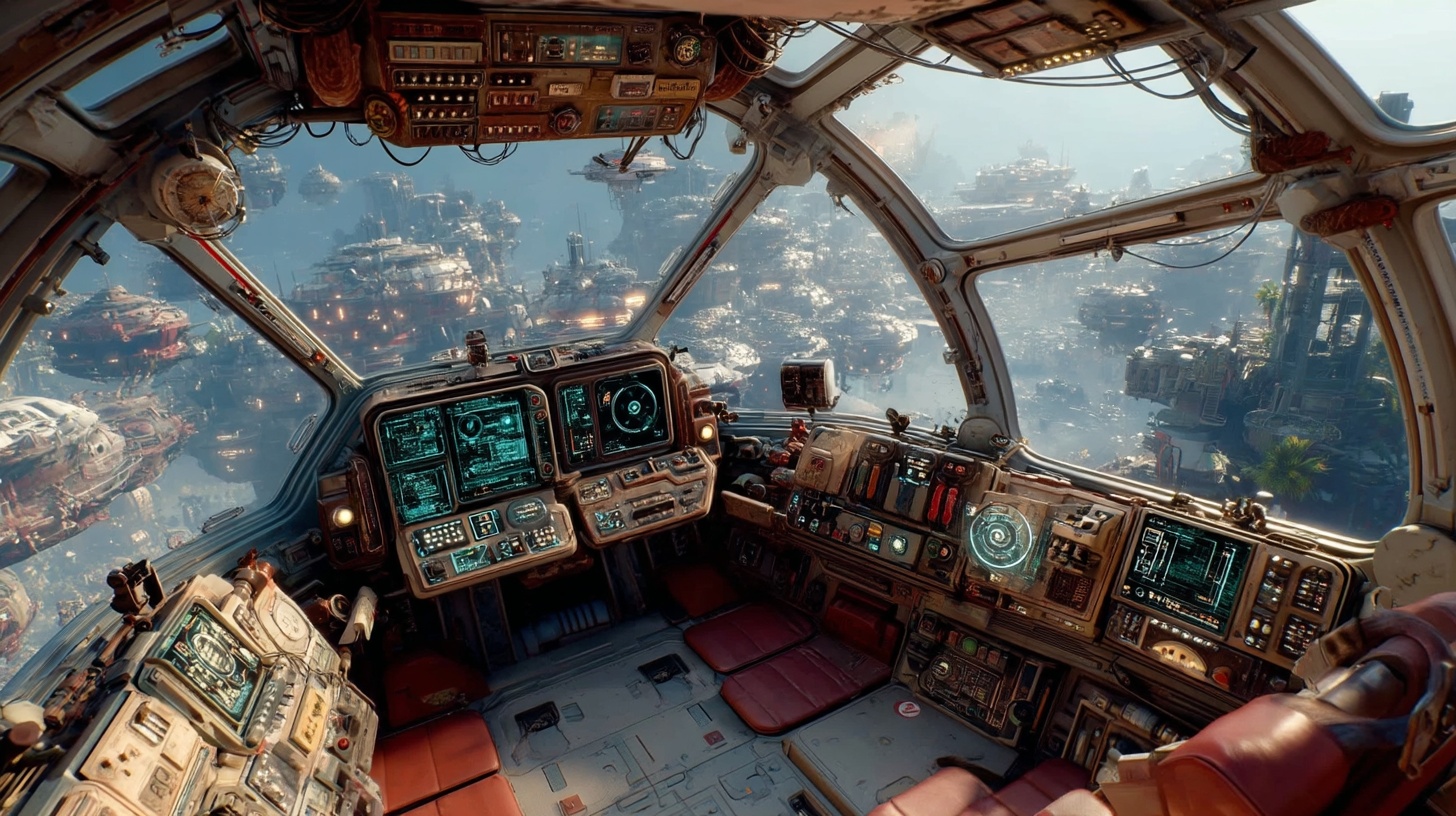
Seidel (2020) suggests that the integration of AI, Virtual Reality (VR), and cloud computing will define the next generation of adaptive gaming.
Cloud gaming: accessibility and convenience
Cloud gaming is another major shift, allowing players to stream games from remote servers without expensive hardware. Platforms like NVIDIA GeForce Now and Xbox Cloud Gaming have made high-quality titles accessible on laptops, tablets, and smartphones, removing the traditional barrier of high-end consoles.
Video games in education and professional training
Beyond leisure, video games now serve vital roles in education and professional training. Simulations help train pilots and surgeons in risk-free environments, while Minecraft: Education Edition teaches students coding and teamwork through play. Games themselves also develop valuable skills — players often need to understand technical aspects and navigate the internet effectively.
For example, installing mods or cheats, like those for Arena Breakout https://wh-satano.ru/en/cheats/arena_breakout, requires some technical knowledge and problem-solving abilities. Meanwhile, the rise of eSports has turned competitive titles like League of Legends into a global economic powerhouse, attracting millions of viewers and billion-dollar sponsorships.
The future: VR, AR, and neural interfaces
Looking ahead, Virtual Reality (VR) and Augmented Reality (AR) continue to blur the lines between physical and digital spaces. Even more experimental are neural interface systems. Companies like Neuralink and Valve are researching brain-controlled gaming, which could eventually allow players to interact with virtual worlds without physical controllers.
Endless evolution
The evolution of video games shows no signs of slowing. As technology merges with human imagination, games will continue to provide new ways to connect, learn, and experience worlds without boundaries.